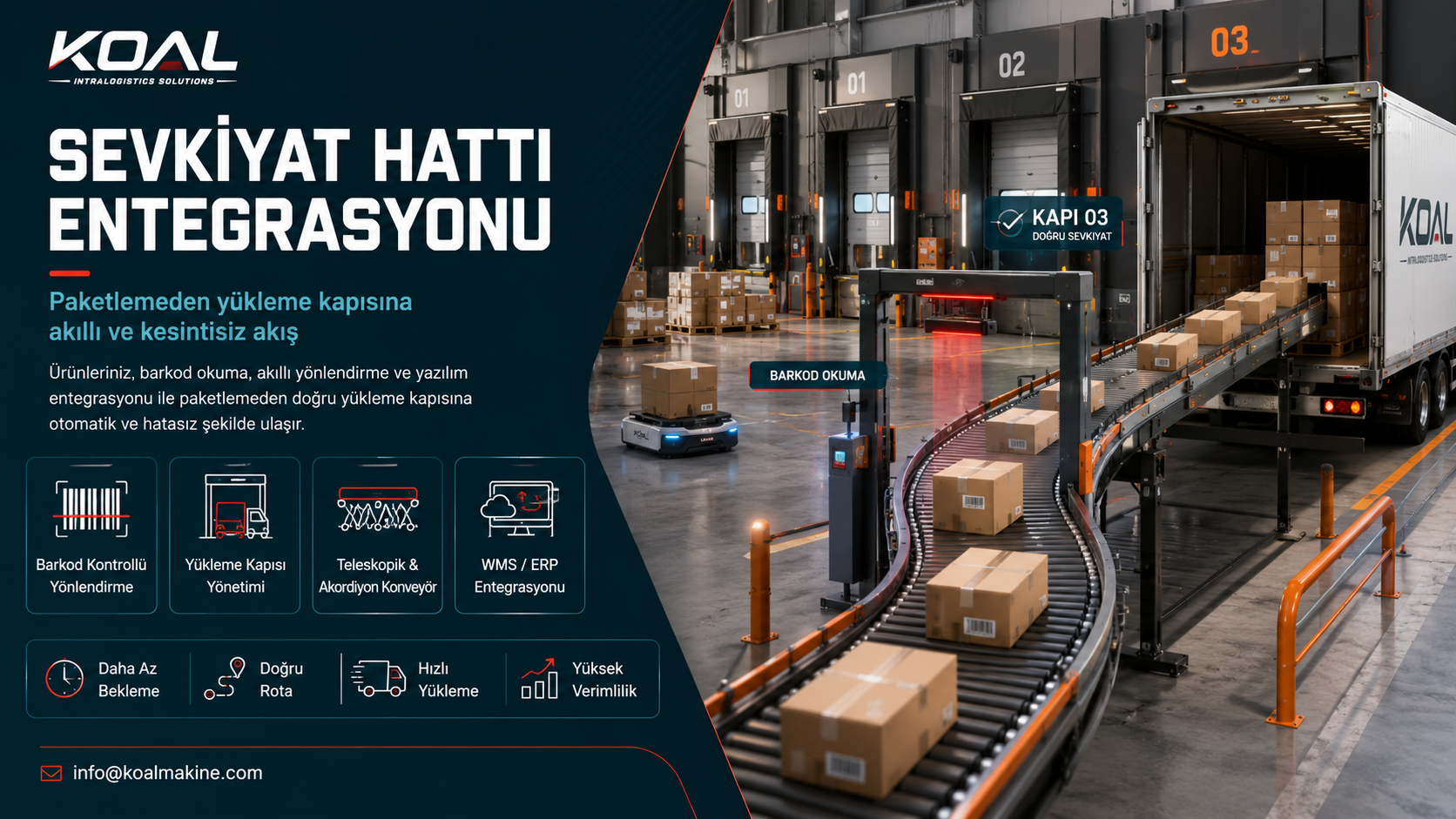
Shipment Line Integration is an intralogistics automation approach that ensures the automatic, controlled and uninterrupted transfer of products that complete the storage, order preparation and packaging processes to the correct shipping point. In logistics operations where daily order volume increases, fast preparation of products is not enough. The prepared parcels, packages or crates must be delivered to the correct vehicle, route and loading area on time. Properly planned Shipment Line Integration accelerates this process and ensures more efficient use of operational capacity. In manual shipping operations, it is possible for products to wait, be transported to the wrong loading area, or cause congestion at the loading doors. When conveyor systems, automatic guidance technologies, barcode readers and control software are used together, products can move in a controlled manner from the packaging area to the vehicle loading point.
Why is Delivery Line Integration Important?
Waiting in the shipping area for orders prepared with high performance in the warehouse reduces the overall efficiency of the operation. Shipping Line Integration aims to create a balanced product flow between order preparation capacity and loading capacity.
- Reduces waiting times in the shipping area.
- It reduces the need for manual product handling.
- Helps reduce the risk of incorrect installation.
- It regulates the product flow at the loading gates.
- It enables more efficient use of workforce.
- Supports operational capacity during busy periods.
Since short delivery times have become critical, especially in e-commerce, retail and distribution operations, it is a significant advantage for the shipping area to work together with other automation systems in the warehouse.
How to Ensure Product Flow from Packaging Area to Shipment?
The shipping process usually begins with the completion of packaging and labeling processes. By reading the barcode or order information on the package, it can be determined which route, carrier or loading gate the product should be transferred to. After this point, the product is transported to the relevant shipping line via the conveyor infrastructure. When determining line capacity, hourly product quantity, package dimensions, product weights, number of loading doors and busy hours of operation should be evaluated together. In systems created without this analysis, accumulations may occur at certain points.
Uninterrupted Shipment Flow with Conveyor Systems
For a successful Shipping Line Integration, the correct conveyor infrastructure must be established between the packaging area and shipping points. Different conveyor technologies can be preferred depending on the size, weight, base structure and required carrying capacity of the product.
Correct positioning of conveyors helps products move to the shipping area without unnecessary handling. In facilities with more than one line, the product flow can be combined or distributed to different outlets as needed.
Transfer to the Correct Shipping Point with Automatic Routing
In high-volume operations, simply transporting products is not enough. Every package needs to be routed to the correct carrier, route or loading gate. Automatic sorting technologies used within the scope of Shipment Line Integration help to carry out this process in a fast and controlled manner.
Routing systems working with barcode readers and automation software can check product information and transfer the package to the designated exit. Thus, it is aimed to reduce incorrect shipments and reach higher capacity in intensive operations.
Flexible Transport Solutions in Loading Areas
In the final stage of the shipping operation, the products must be transferred to the vehicles quickly and regularly. At this point, Shipping Line Integration helps deliver the products to the vehicles without unnecessary handling by combining the fixed transportation infrastructure within the warehouse with the loading areas. Choosing the right equipment, especially during peak loading hours, plays an important role in reducing vehicle waiting times.
While telescopic systems extend into the vehicle body and reduce the loading distance, accordion conveyors provide flexible product transfer in variable working areas. Thus, the need for personnel to carry out manual transportation over long distances may be reduced.
Integrated Shipment Management with Storage Systems
Keeping the products in the correct location before shipment also affects operational performance. When working with automatic storage and vertical transportation systems, Shipping Line Integration facilitates the preparation of products in order of order and their timely transfer to the shipping line.
This integration is especially important in multi-storey warehouses and operations with high product diversity. Controlled transfer of products from the warehouse to the shipping line can prevent unnecessary accumulation in the loading area.
Real-Time Control with Software Integration
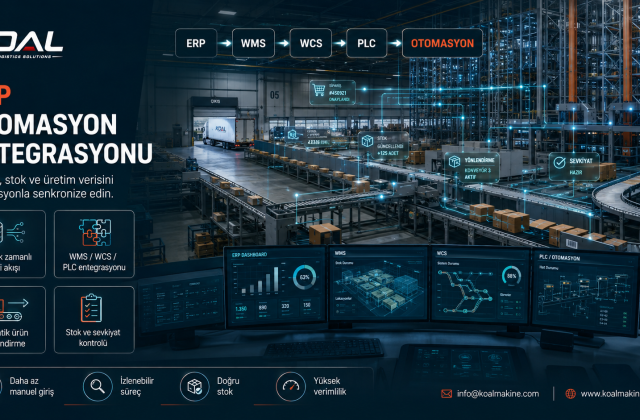
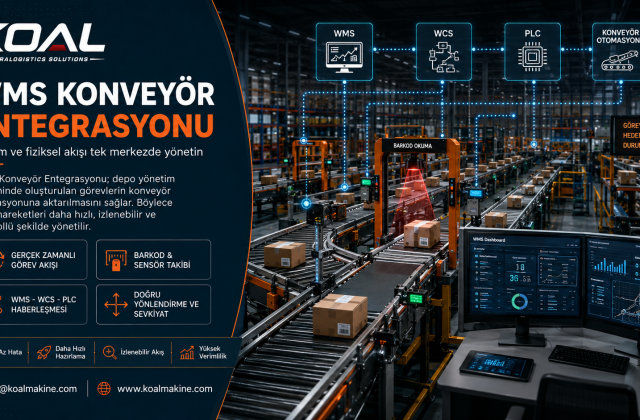
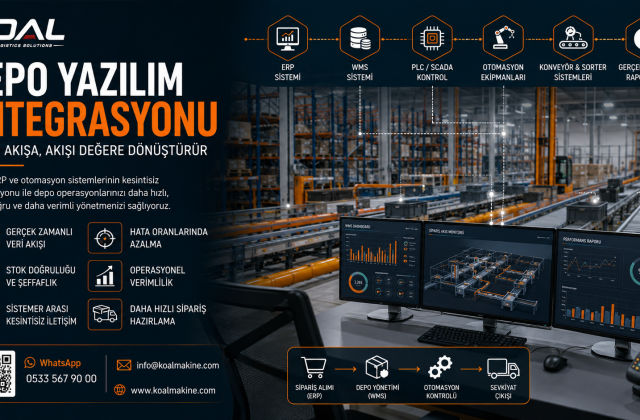
A modern Shipping Line Integration must work with WMS, ERP, PLC and barcode reading infrastructures. When the product enters the shipping line, the system can determine the relevant exit or loading gate by checking the order information. Thus, product movements can be monitored in real time. Collected data; It allows analyzing indicators such as hourly shipping capacity, loading gate density, product waiting time and routing performance. This information can be used in capacity planning and process improvement studies.
What Should Be Considered When Planning Delivery Line Integration?
Since the shipping structure of each business is different, system design should be made according to real operation data. Instant capacity needs during busy hours should also be evaluated as well as daily order volume.
- Daily and hourly shipping capacity
- Package, parcel or case dimensions
- Number of loading doors and vehicles
- Carrier and route diversity
- Conveyor and sorter capacity
- WMS and ERP integration
- Technical service and maintenance requirements
- Future capacity increase
Shipment Line Integration, designed specifically for the business, manages the product movement starting after packaging to the loading point in a common automation infrastructure. Thus, waiting times in the shipping area can be reduced, transferring products to the correct exits becomes easier, and high order volumes can be managed in a more controlled manner.
You can contact us to get detailed information about shipping line integration and warehouse automation solutions. Contact via WhatsApp For international information on material handling and intralogistics technologies: MHI – Material Handling Industry
Related guides: What is a conveyor? Types and selection guide · How is the conveyor system cost determined? · KOAL conveyor systems

Since 2010 we have designed, built, installed and serviced sorter and conveyor systems in Gebze. These articles draw on our field experience.