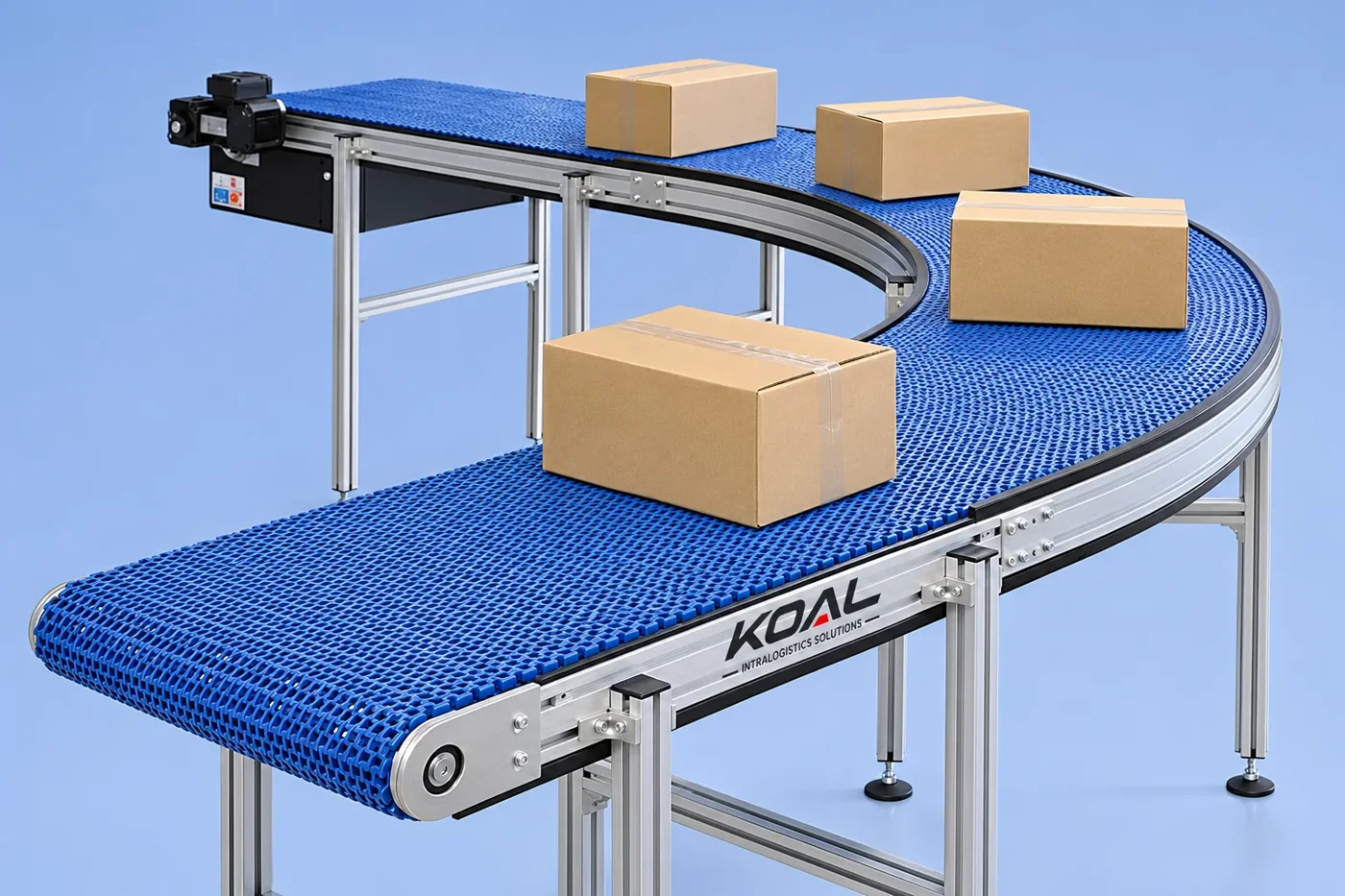

Efficient and Flexible Transport Solutions with Belt Conveyor
Belt Conveyor is one of the most common conveyor systems that ensures the transportation of products in an orderly, safe and controlled manner. It can be used for different applications in many sectors such as distribution, logistics, cargo, food, medicine and airport. It offers flexible usage advantages to businesses thanks to its structure that can be adapted to different product types and project needs.
In operations with intense product flow, it is of great importance that the transportation process proceeds regularly. At this point, Belt Conveyor systems increase operational efficiency by ensuring that the products move stably on the line. Thanks to its quick and easy installation, it provides a practical solution for both new projects and integration into existing lines.
The line structure may be flexible depending on the project criteria. Depending on demand, customer-specific production can be made with tape types that comply with FDA, GMP and GLP standards. This feature makes the use of Belt Conveyors even more important, especially in food, medicine and sectors with high hygiene requirements.
What is Belt Conveyor?
Belt Conveyor is a mechanical transport system that allows products to be transported in a certain direction on a conveyor belt. Thanks to the motor, drum and conveyor belt on the line, the products move in a controlled manner.
These systems; It can be used to transport many product groups such as parcels, boxes, packages, packaged products and different industrial materials. The warehouse plays an important role in the production and shipping processes as it ensures the smooth, uninterrupted and safe transfer of products.
Belt Conveyor systems can be produced specifically for the project with different length, width and carrying capacity options. This allows establishing a transportation line that suits the needs of businesses.
How Does Belt Conveyor Work?
Belt Conveyor works with a motor driven drum system. The movement of the motor is transmitted to the conveyor belt and the products on the belt are transported in the specified direction. Thanks to its bidirectional operation feature, the system can be used in forward or reverse direction as needed.
The centre-driven structure supports more balanced and efficient operation of the system. The adjustable foot support makes it easier to adapt to ground conditions during installation. In this way, the Belt Conveyor can be positioned more easily in different working areas.
Constant and controlled progress of the products on the belt provides a significant advantage, especially in areas where sensitive transportation is required. For this reason, the belt conveyor system is preferred as a reliable transportation solution in different sectors.
Areas of Use
Belt Conveyor has a wide range of usage in different sectors. It can be used in many processes such as product transportation, transfer, shipment, packaging and line feeding.
The main areas of use are:
- distribution centers
- logistics facilities
- cargo operations
- Food production and packaging areas
- pharmaceutical industry
- Airport applications
- E-commerce warehouses
- Production lines
- Packaging systems
- In-warehouse transportation areas
- Shipment preparation lines
Belt Conveyor systems used in these areas regulate the product flow and contribute to a more planned progress of operations.
Belt Conveyor Advantages
Belt Conveyor offers businesses significant advantages such as speed, flexibility, security and easy integration. It stands out as a versatile transportation system thanks to its structure suitable for different sectors.
Flexible Project Structure
The line structure can be changed according to the project criteria and business-specific solutions can be developed. Special production can be made according to product type, transportation intensity, working area and sector requirements.
This flexibility is an important advantage, especially for companies with different operational needs.
Quick and Easy Installation
Belt Conveyor systems can be installed quickly and easily. This feature shortens the commissioning process in new projects and facilitates integration in existing lines.
Short installation time helps operations continue with minimal interruption.
Production in accordance with different standards
Tape options complying with FDA, GMP and GLP standards can be used upon request. This provides safer use in sectors with high hygiene and quality requirements.
It is of great importance to choose a Belt Conveyor that complies with the standards, especially in the food and pharmaceutical industry.
Bidirectional Operation
The bidirectional operation of the system allows products to be transported in different directions. This feature provides more flexible use during operation and makes it easier to shape the transport process according to needs.
Adjustable Foot Support
Adjustable foot support helps the system adapt to different ground conditions. Thus, a more balanced structure is achieved both during the installation and usage processes.
Safe and Regular Product Transportation
The products moving on the conveyor belt are transferred in an orderly and controlled manner. This reduces product confusion and reduces the need for manual intervention.
This way, businesses can create a safer and more efficient product flow.
Which Products Is It Suitable For?
Belt Conveyor can be used to transport many different types of products. As long as the conveyor belt surface is compatible with the infrastructure of the product, the system operates safely and efficiently.
Eligible product groups are:
- parcels
- cardboard boxes
- Packaged products
- food packaging
- medicine boxes
- cosmetic products
- plastic crates
- Light and medium weight industrial products
- cargo shipments
- E-commerce order packages
According to the product features, the Belt Conveyor system can be specially designed and the appropriate belt type can be selected.
Technical Information
| Feature | Value |
|---|---|
| Maximum Load Capacity | 50kg/m |
| Conveyor Speed | 0.1 to 1 m/s |
| Working Direction | two-way |
| Ambient Temperature | 0 to +40 °C |
Driver Features
| Feature | Value |
|---|---|
| Supply Voltage | 380V / 50Hz / 3 Phase |
| Electric Power | Max. 3 kW |
| Engine Type | Gearmotor / drum motor |
| Drive Roller Diameter | 114/76mm |
| Return Roll Diameter | 76mm |
| Optional Diameter | Other diameters on request |
Material Properties
| Feature | Value |
|---|---|
| Conveyor Belt | PVC coated two-layer polyester fabric, matte top, black |
| Under Belt Sheet | Wood or galvanized steel |
| Drive Drum Material | Steel |
Size Information
| Feature | Value |
|---|---|
| Conveyor Length | Between 1,500 and 12,500 mm |
Product Features
The main features that stand out in Belt Conveyor systems are:
- Center driven structure
- Adjustable foot support
- Bidirectional operation
- Quick and easy installation
- Customer-specific production possibility
- Tape options that comply with FDA, GMP and GLP standards
- Compatible use in different sectors
- Safe and orderly product transportation
These features make the Belt Conveyor system a versatile and efficient conveying solution.
What to Consider When Choosing a System?
When choosing a Belt Conveyor, not only the length of the system but also the product type and working conditions should be evaluated together. The right choice is critical to long-term efficiency.
Product Weight and Structure
The maximum load capacity of the system should be considered as 50 kg/m. The weight, size and surface structure of the products to be transported are important for choosing the appropriate belt and carrier system.
Conveyor Speed
Conveyor speed can be planned between 0.1 and 1 m/s. The correct speed should be determined according to daily transaction volume and operation tempo.
Working Environment
The system is suitable for operation at ambient temperatures of 0 to +40 °C. Temperature, hygiene and environmental conditions of the usage area should be taken into account.
Tape Type
Belt selection is of great importance in food, pharmaceutical or special production areas. Depending on demand, tape types that comply with FDA, GMP and GLP standards can be preferred.
Line Length and Layout
Conveyor length can be planned between 1,500 mm and 12,500 mm. The appropriate system must be determined by taking into account the work area, operator access and existing line layout.
Benefits to Businesses
Belt Conveyor provides businesses with many operational advantages in product transportation processes.
The main benefits are:
- Speeds up the product transportation process
- Regulates product flow
- Reduces manual workload
- Adapts to different sectors
- Offers two-way use
- Provides the advantage of fast installation
- Project-specific production can be made
- Offers band options that comply with hygiene standards
- Easily integrated into existing lines
- Increases operational efficiency
Thanks to these advantages, Belt Conveyor becomes a strong investment in warehouse, production and shipping processes.
Maintenance and Long-Term Use
Regular maintenance is required for the Belt Conveyor system to operate efficiently and for a long time. The belt surface, drums, engine structure and fasteners should be checked at regular intervals.
Things to consider during the maintenance process:
- The conveyor belt should be checked regularly
- The tape surface should be kept clean
- The drive drum and return rollers should be inspected
- Motor and reducer connections should be checked
- The underband sheet and chassis structure should be reviewed.
- Foot supports and alignment should be checked
- Electrical connections should be checked periodically
- Operators should be trained in correct use
Regular maintenance maintains system performance and prevents unplanned downtime.
Technical Support and Communication
You can contact our expert team to get detailed information about Belt Conveyor, to evaluate the technical features according to your project or to determine the most suitable transportation system for your business.
A specific solution can be developed for your project according to details such as product type, carrying capacity, line length, working direction, industry requirements and appropriate belt standard.
For detailed information, you can contact us via our contact page.