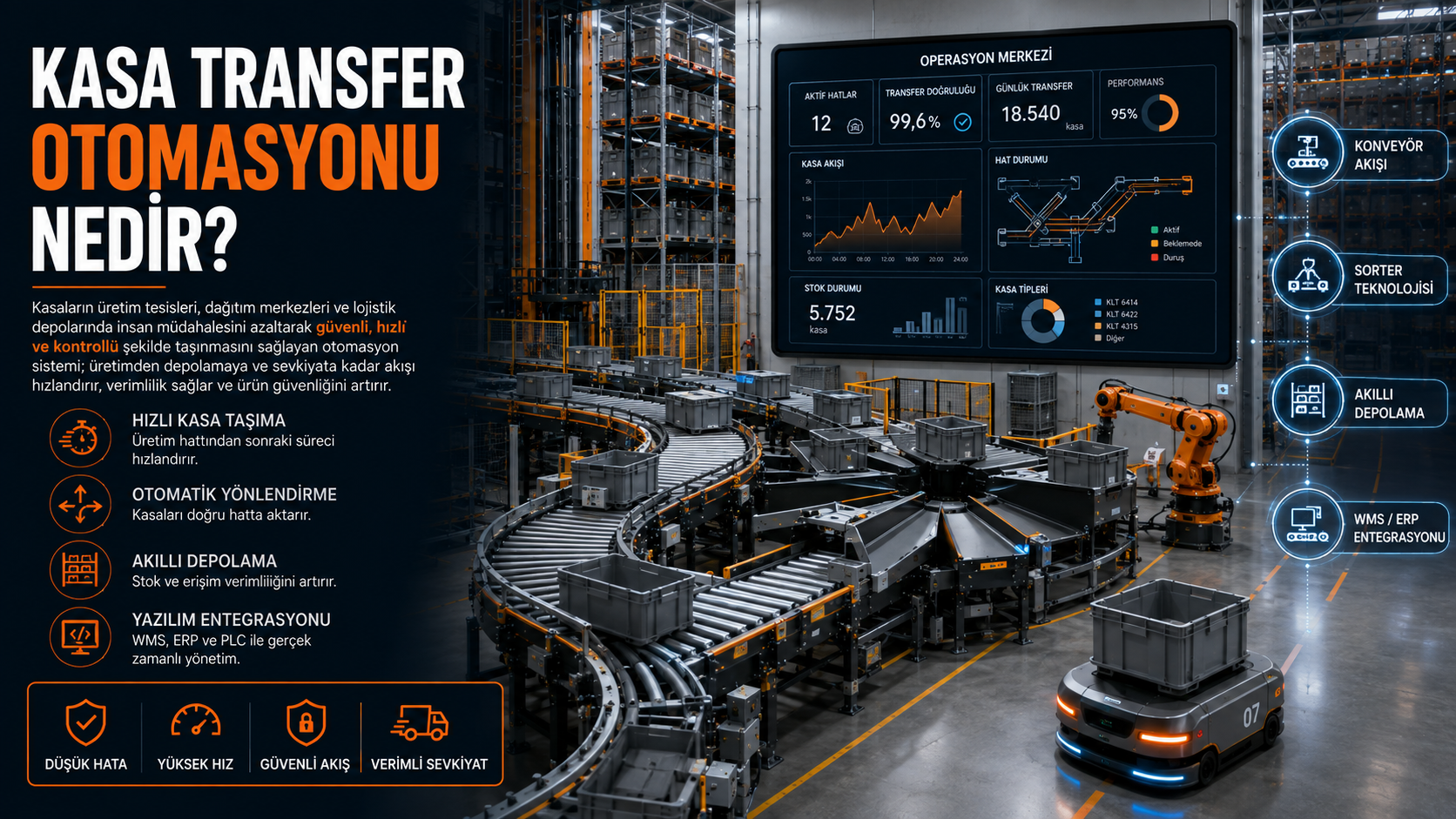
Case Transfer Automation is an automation system that ensures safe, fast and controlled transportation of cases in production facilities, distribution centers and logistics warehouses by minimizing human intervention. Due to increasing production volume, order density and shorter delivery expectations, manual transportation methods cannot provide sufficient performance for many businesses. For this reason, businesses are turning to Cash Transfer Automation solutions in order to make their operations more efficient. Thanks to modern automation infrastructures, crates can be moved from the production line to the packaging area, quality control stations, automatic storage systems or shipping points without interruption. Thus, while operational processes are accelerated, workforce efficiency increases and product safety increases to a higher level.
Why is Case Transfer Automation Important?
Manual handling of crates in production and warehouse operations can result in loss of time, product damage, and high labor costs. Case Transfer Automation standardizes the product flow and ensures that operations proceed in a more planned and uninterrupted manner. Thanks to automatic transport solutions, the production line can operate without stopping, products are transferred to the next process without waiting, and operational bottlenecks are significantly reduced.
- Cashier movements accelerate.
- Labor costs are reduced.
- Operation continuity is ensured.
- The risk of product damage is reduced.
- Production capacity increases.
- Shipping processes are accelerated.
How Does Cash Transfer Automation Work?
A modern Case Transfer Automation is managed with sensors, PLC control systems and automation software. The cases leaving the production line are transferred to the conveyor systems and move automatically according to the determined routes. All movements are tracked in real time as the cases are directed to needed production stations, quality control areas or storage areas. Thus, processes can be managed in a safer and more controlled manner.
Uninterrupted Case Transport with Conveyor Systems
Establishing the correct conveyor infrastructure is critical for successful Case Transfer Automation. The appropriate system should be selected by taking into account the chassis dimensions, carrying capacity and operation structure.
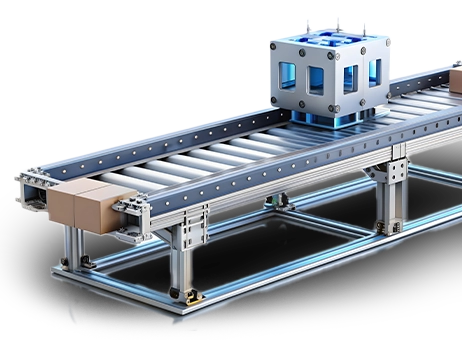
Conveyor systems ensure that cases move smoothly and safely along the production line. Thus, operating capacity increases significantly while waiting times are reduced.
Automatic Routing with Sorter Systems
In some production and logistics operations, crates must be routed to different production lines or shipping points. At this point, Case Transfer Automation works together with sorter systems and automates the product flow.
Thanks to sorter technologies, cases are automatically directed to the right line, reducing manual intervention and increasing the accuracy of operations.
Optimize Cash Flow with Smart Storage Systems
Successful Case Transfer Automation includes not only transporting the cases, but also storing them in the right locations and delivering them quickly to the production or shipping processes when needed. Thanks to smart storage systems, warehouse space is used more efficiently, product access times are shortened and operational processes are managed in a more planned manner. Especially in businesses with high product diversity, automatic storage solutions increase stock accuracy and eliminate unnecessary waiting times for cash registers. Thus, production and logistics operations proceed in a more balanced manner.
Real-Time Process Management with Software Integration
A modern Case Transfer Automation does not consist only of mechanical equipment. Thanks to systems integrated with WMS (Warehouse Management System), ERP and PLC-based automation software, all cash register movements are tracked in real time. You can instantly control which case is on which line and which production station or shipping point it will be directed to. Thanks to real-time data management, operational performance is analyzed, bottleneck points are identified and maintenance planning can be made more efficiently. This structure supports production continuity while reducing unplanned downtime.
Which Businesses Is Cash Transfer Automation Suitable For?
Case Transfer Automation provides efficiency in many sectors where products are transported in cases. Automation systems offer significant advantages, especially for businesses that make continuous production and have high product flow.
- Food and beverage production facilities
- Automotive supplier industry
- white goods manufacturers
- Pharmaceutical and medical production facilities
- E-commerce order preparation centers
- Logistics and distribution centers
Systems designed according to operational needs in different sectors can be easily integrated into existing production lines, making processes more efficient.
What Should Be Considered When Choosing Cash Transfer Automation?
When choosing the right Case Transfer Automation, not only current capacity but also future growth targets should be taken into consideration. Modular and scalable systems accelerate return on investment in the long term.
- Daily case carrying capacity
- Case dimensions and transport weights
- Layout plan of the production line
- Suitability of conveyor systems
- WMS and ERP integration
- Maintenance and technical service support
- Modular structure suitable for future capacity increases
A correctly designed Case Transfer Automation combines all processes from production to storage and shipment in a single automation infrastructure. It reduces labor costs, accelerates product flow and significantly increases operational efficiency while ensuring safe transportation of cases. Especially for growing production facilities and high-volume logistics centers, automation-supported case transfer systems are among the important investments that provide long-term competitive advantage.
You can contact us to get detailed information about case transfer automation and warehouse automation solutions. Contact via WhatsApp For international information on material handling and intralogistics technologies: MHI – Material Handling Industry
Related guides: What is a conveyor? Types and selection guide · How is the conveyor system cost determined? · KOAL conveyor systems

Since 2010 we have designed, built, installed and serviced sorter and conveyor systems in Gebze. These articles draw on our field experience.