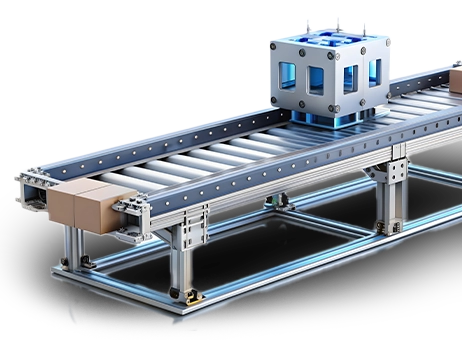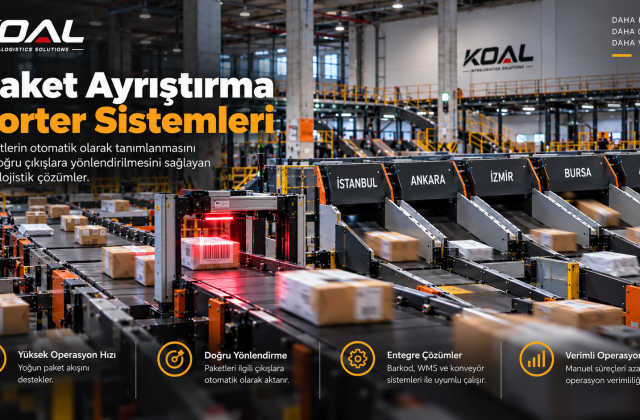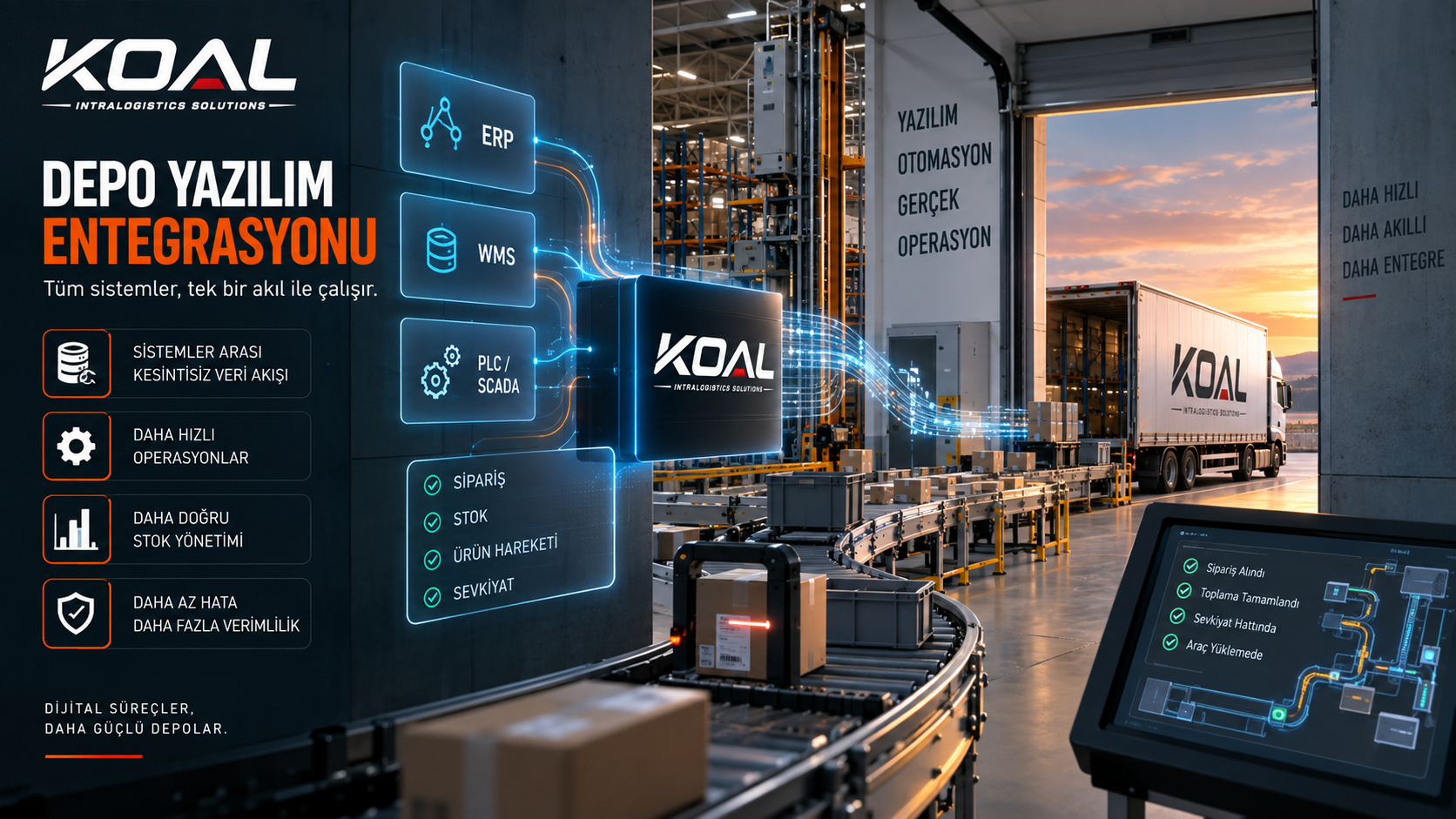
Sensor Sorting System is an intralogistics automation solution that enables parcels, packages, cases or products moving on the conveyor line to be detected through sensors and automatically directed to different lines according to specified criteria. As product volume increases in warehouses and distribution centers, manual sorting processes can limit operational speed. A correctly designed Sensor Separation System helps manage the product flow in a more orderly, faster and controlled manner. Photocell, distance sensor, position sensor or other detection technologies required by the operation can be used in the system. The signal received from the sensor is transmitted to the control system and the movement of the product is managed according to the defined automation scenario. When necessary, data from barcode readers, PLC, WMS or other warehouse automation systems can also be included in the routing decision.
How Does Sensor Separation System Work?
When the product reaches the designated detection point on the conveyor, the sensor detects the product. This information is transferred to the PLC or relevant control system. According to the rules defined in the system, the product can continue to move forward, be transferred to a different conveyor or be directed to a specific exit. In applications where multiple products move on the same line, sensors can also be used to control the distance and position between products. Thus, the Sensor Sorting System supports not only the routing process but also the correct timing of the product flow.
What are the advantages of product sorting with sensors?
In operations where manual sorting is intensive, employees may need to check each product and transfer it to the correct line. Automation infrastructure helps perform repetitive routing operations according to specified scenarios.
- Reduces the need for manual product sorting.
- It supports the regular progress of the product flow.
- It enables automatic routing operations.
- It helps detect the product position on the conveyor.
- It facilitates the management of high-volume operations.
- It can work integrated with different automation equipment.
Using a Sensor Sorting System, especially in e-commerce warehouses, distribution centers, production facilities and shipping operations, can contribute to transforming product movements into a more controlled automation structure.
Sensor Separation in Conveyor Systems
In order for sensor-based sorting to work efficiently, the conveyor system must be designed in accordance with the product features and target capacity. Having products pass the sensing point at specific positions and intervals makes it easier to accurately match data received from sensors with physical product movement.
After the product is detected by the sensor, PLC can send commands to the necessary equipment. In this way, operations such as stopping the product, continuing the product or transferring it to an alternative transport line can be carried out automatically.
Sensor Integration with Sorter Systems
Sensor Separation System can be used together with sorter solutions in facilities requiring high capacity and many outlets. While sensors detect the entry and location of the product into the system, sorter equipment ensures the physical transfer of the products to the designated exits. Different sorter technologies can be evaluated according to operational capacity, product dimensions, weight range and number of exits:
Positioning the sensors at the right points is important for the timing of the sorter system. When the position of the product is determined correctly, the control system can activate the guidance mechanism at the appropriate moment and ensure that the product is transferred to the target exit.
Smart Separation with WMS and PLC Integration
Data obtained from sensors can be used not only for physical detection of the product, but also with information from warehouse management systems. Sensor Sorting System helps create more comprehensive routing scenarios by integrating with WMS or other warehouse software via PLC control infrastructure. For example, when the sensor detects product arriving on the conveyor line, the control system can determine the current position of the product. Product information received via barcode or a different identification system can be matched with order and shipment data in WMS. PLC can activate the relevant conveyor or separation mechanism according to the incoming target information. Thus, physical sensing, software data and automation equipment work in coordination in the same process.
Sensor Product Control in Storage Systems
In automatic storage applications, it is important to accurately determine the positions of the products at the transfer points. Sensors can help start the next automation task safely and at the right time by checking whether the product has reached the designated point. As a part of this structure , the Sensor Sorting System can be used to transfer products to different storage or transfer lines. In transport lines integrated with AS-RS Mini Load Systems, sensors can support the control of the movements of cases and boxes at entry-exit points. In projects requiring transfer between floors or different levels, Case Pallet Elevators can be used with conveyor and control infrastructure.
Sensor Sorting System on Shipping Lines
In shipping areas, it is possible for products belonging to different orders or loading points to come from the same transportation line. Separating these products at the right time is important for the orderly progress of the loading operation. The Sensor Sorting System detects that the product has reached the diverting point and ensures that the relevant mechanism is activated at the appropriate time. After the sorting process, the products can be transported to the loading area. Telescopic Conveyors can be used in vehicle loading and unloading operations. When a more flexible conveyor line is needed in variable work areas, Accordion Conveyor ( KOALFLEX ) solutions can be evaluated.
What Should Be Considered When Planning a Sensor Separation System?
The product profile, capacity and line layout of each warehouse and production facility are different. For this reason, it is not enough to focus only on sensor selection when designing a Sensor Separation System. Conveyor speed, distance between products, response time of the steering mechanism and control software should be evaluated together.
- The size and weight ranges of the products should be determined.
- Appropriate sensor technology must be selected.
- The points where the sensors will be positioned should be analyzed.
- Conveyor speed and distance between products must be calculated.
- The operating time of the separation mechanism must be taken into account.
- PLC and software communication must be planned correctly.
- Error scenarios should be created for undetectable products.
- Future capacity increases should be taken into consideration.
Properly designed Sensor Sorting System brings together sensor technologies with conveyors, sorter equipment and control software in a common automation infrastructure. Detecting the products at the right time and transferring them to the appropriate line supports a more controlled management of the material flow in the warehouse. A scalable system architecture can facilitate the inclusion of new lines and automation equipment into the existing structure when the operational volume increases.
You can contact us to get detailed information about sensor sorting systems, conveyor automation and intralogistics projects. Contact Via WhatsApp You can review MHI – Material Handling Industry resources for sectoral information about material handling and intralogistics automation technologies.
Related guides: Cross belt or tilt tray? Comparison of sorter types · 10 questions when choosing a sorter system · KOAL sorter systems

Since 2010 we have designed, built, installed and serviced sorter and conveyor systems in Gebze. These articles draw on our field experience.