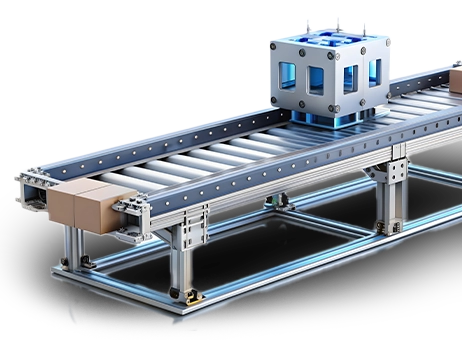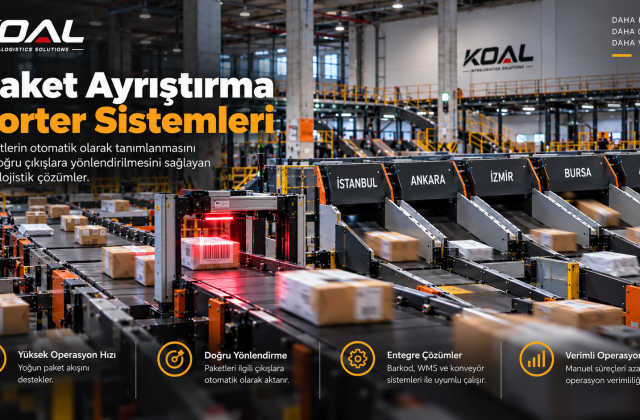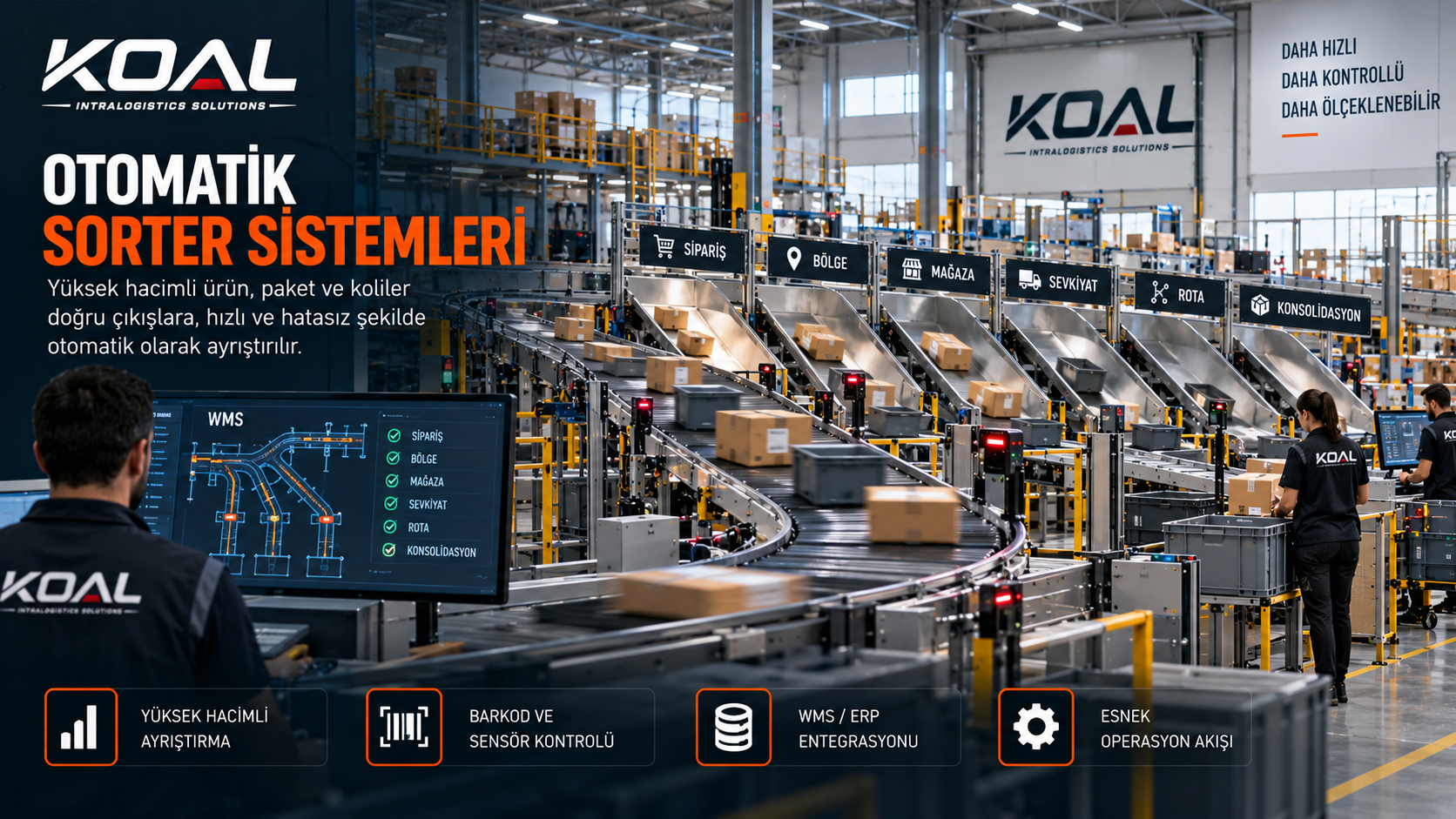
Automatic Sorter Systems are intralogistics automation solutions that enable the automatic sorting of products, parcels, packages and boxes moving in warehouses, logistics, e-commerce, cargo and distribution centers according to predetermined criteria. In facilities with high product volumes, manual sorting processes may limit operating speed above a certain capacity. Correctly designed sorter systems help to automatically identify products and direct them to the relevant order, route, customer or shipment exits. Modern sorter applications use not only physical sorting equipment. Software infrastructures such as conveyors, barcode readers, sensors, PLC control systems, WMS and ERP can work together. Once the product enters the system, its identity is determined, target information is checked and automatically transferred to the appropriate output. Thus, Automated Sorter Systems can automate important stages of the ongoing material flow, from product entry to shipment.
What is Automatic Sorter System?
Automatic sorter system is an automation infrastructure consisting of mechanical and software components that enable the separation of materials coming from the main product flow into different targets. Separation of products; It can be carried out according to different criteria such as barcode, order number, customer, region, cargo company, route, store or loading gate. Automatic Sorter Systems are especially advantageous in facilities where many different target products pass through the same transportation line. Using the target information defined for each product, the system activates the routing mechanism at the right time and ensures that the product is transferred to the relevant exit.
How Do Automated Sorter Systems Work?
The separation process begins with the product being taken into the sorter feeding line. As the product moves on the conveyor, it is detected through a barcode reader, sensor or a different identification technology. The obtained information is sent to the control system and the target output defined for the product is determined. As the product moves through the sorter, its position is tracked by the automation system. When the target exit point is reached, the relevant separation mechanism is activated and removes the product from the main flow. Depending on the sorter technology used, this process can be carried out via moving belt, wheel, tray or different transfer mechanisms.
What are the advantages of Automatic Sorter Systems?
In manual sorting processes, employees must identify the products, check the target information and transfer them to the right point. When product volume increases, these processes may require a significant amount of time and labor within the operation. Automatic Sorter Systems help manage the operation in a more controlled manner by automating repetitive sorting processes.
- Helps reduce the need for manual product sorting.
- Supports high volume product flow.
- It makes it easier to direct products to the correct exits.
- It can speed up order preparation and shipping processes.
- Increases traceability of product movements.
- It can contribute to more efficient use of the operating area.
- It supports the management of increasing product volume during peak periods.
Which Automatic Sorter Systems Can Be Used?
The selection of sorter technology should be made based on the operation's product profile, hourly capacity, facility layout and the number of outputs required. Not every sorter technology may be suitable for the same product and operation structure.
Cross Belt Sorter
Cross Belt Sorter is one of the sorter technologies that enables the transfer of products to different exit points via independent conveyor belts. It can be used in high-volume distribution, e-commerce and logistics operations where there are many exits.
Linear Cross Belt Sorter
Linear Cross Belt Sorter can be used in projects where linear system layout provides advantages in terms of operation or facility geometry. It supports automatic sorting of products to designated destination points.
Wheel Sorter
Wheel Sorter enables the transfer of parcels and packages with suitable base structure to different lines, thanks to its wheel mechanisms that can change direction. It can be used in operations where continuous product flow is required.
Tilt Tray Sorter
Tilt Tray Sorter is one of the sorter technologies where the products move on carrier trays and are transferred to the relevant point when they reach the target exit. It can be used in applications where a large number of parsing outputs are required.
Roll-On Sorter
Roll-On Sorter is one of the sorter solutions that can be used in automatic sorting projects where product features and operational requirements are suitable. When choosing a system, the actual product profile and capacity need should be evaluated together.
Sorter Integration with Conveyor Systems
In order for the sorter system to operate at the targeted capacity, products must be fed into the system in a regular and controlled manner. For this reason, when designing Automatic Sorter Systems, the conveyor infrastructure as well as the sorter equipment should be considered as a whole.
Products coming from more than one feeding line can be transferred to the main sorter line in a controlled manner using merge conveyors. A more balanced and uninterrupted material flow can be created when the distance between products, conveyor speed and sorter input capacity are calculated correctly.
Automatic Parsing with Barcode Reading
Barcode technology is one of the widely used methods for automatic identification of products in the sorter system. When the barcode on the product is read, order, customer, route or shipment information can be checked. In line with this information, it is determined which sorter exit the product will be transferred to. Products whose barcode cannot be read or whose target information is not available in the system can be transferred to special control exits. Thus, it becomes possible to check problematic products at a separate point without interrupting the main operation flow. Working with barcode readers, Automated Sorter Systems support matching physical product movements with digital operation data.
Automatic Sorter Integration with WMS and ERP
In modern warehouse and logistics operations, it is important to manage physical product flow in coordination with digital systems. Automatic Sorter Systems can be integrated with software such as WMS and ERP to automatically route products according to order, customer, route, store or shipment information. When the product reaches the sorter line, the barcode information can be read and matched with the record on WMS. After the system determines the target output, the routing information is transferred to the automation control layer. PLC and sorter control system follows the physical location of the product and performs the sorting process at the right point. When the process is completed, the new status of the product can be sent back to the software system.
Using Automatic Sorter in Warehouse Operations
The need for separation may arise in different processes such as product acceptance in warehouses, order preparation, consolidation, packaging and shipment. Especially in facilities where many products move on common conveyor lines, manual guidance points can create a bottleneck in the operation. Automated Sorter Systems can automate the transfer of products to different warehouse areas or operation points. Products coming from collection areas can be sorted according to order information, and packaged parcels can be sent to different exits according to the carrier or shipping route. Thus, the same sorter infrastructure can be projected according to different processes within the facility.
Sorter Systems in E-Commerce and Fulfillment Operations
In e-commerce operations, the number of orders can change significantly during the day. During campaign periods or special shopping days, very high product volumes may need to be processed in a short time. For this reason, it is important to plan the sorting capacity in fulfillment centers according to the peak operation load. Automatic Sorter Systems can help sort products coming from different collection areas on an order basis, transfer them to consolidation points or direct them to different shipping lines after packaging. Thus, automation can be used in successive operational stages, from order preparation to cargo sorting.
Automatic Sorting in Cargo and Distribution Centers
Cargo and distribution centers may contain thousands of packages belonging to different cities, regions, branches or routes within the same operation. Separating these packages to the right targets in a short time directly affects the total performance of the transfer center. After the barcode of the package entering the sorter line is scanned, target information can be determined and the package can be automatically transferred to the relevant exit. Automated Sorter Systems help reduce the need for manual sorting, especially in transfer operations with large numbers of exits and high hourly package volumes.
Sorter Integration with Automated Storage Systems
Sorter systems can be used together with automatic storage technologies to create a more integrated material flow from storage to shipment. Crates or boxes removed from AS-RS Mini Load Systems can be transferred to the conveyor line and sent to the sorter system according to the operation need. Case Pallet Elevators can be included in the system in projects where product movement is required between different floors or operation levels. In this way, automatic storage, vertical transfer, conveyor transportation and sorter sorting processes can be connected to each other in a common automation infrastructure.
Automated Sorter Systems in Shipping Processes
Before shipping, products must be sorted by carrier, route, region or loading gate. Automated Sorter Systems help automatically direct packages to different exits according to digital shipping information. Sorter outlets can be directly connected to shipping conveyors to ensure that the products are transferred to the relevant loading areas. Telescopic Conveyors can be used in vehicle loading and unloading operations. When a mobile and more flexible transportation solution is needed in the operation area, Accordion Conveyor ( KOALFLEX ) systems can be evaluated. Thus, an integrated product flow can be created that continues from automatic sorting to vehicle loading.
How to Determine Auto Sorter Capacity?
The capacity of the sorter system should not be determined solely by looking at the total number of products per day. Peak hours within the operation, the density at which the products reach the sorter system and the capacity of the exit points should be evaluated together. When performing capacity analysis for Automatic Sorter Systems, minimum and maximum dimensions of the products, weight range, required distance between the products, number of feeding lines, number of target exits and conveyor speeds should be taken into account. It is also important to take into account the expected future operational growth at the project stage for the long-term usability of the system.
What Should Be Considered When Choosing Automatic Sorter Systems?
Since the product profile and operation structure of each facility is different, sorter system selection should not be considered a standard equipment purchasing process. In order to determine the correct system, the actual operation data of the facility must be analyzed and the appropriate sorter technology must be selected according to this data.
- Daily and hourly product volume should be analyzed.
- The capacity that may occur during peak periods should be determined.
- Minimum and maximum product dimensions should be examined.
- The weight and packaging features of the products should be evaluated.
- The required number of sorter exits must be calculated.
- Conveyor feeding capacity must be compatible with the sorter.
- Barcode reader and sensor points must be planned correctly.
- WMS, ERP and PLC integration should be designed.
- Error outputs must be generated for products that cannot be read or routed.
- Maintenance and service access must be considered in system design.
- Infrastructure suitable for future capacity increases should be created.
How to Choose the Right Automated Sorter System?
Cross Belt Sorter, Linear Cross Belt Sorter, Wheel Sorter, Tilt Tray Sorter and other sorting technologies each meet different operational needs. The needs of an e-commerce center that requires many exits and a logistics facility that transfers high volumes of parcels may not be the same. Therefore, sorter selection should be made according to product profile, target capacity, available space and operation scenarios. Correctly designed Automatic Sorter Systems; It supports faster and more controlled management of product flow by working with conveyors, barcode readers, sensors, WMS, ERP and automation control systems. Sorter infrastructure, designed specifically for the business and created taking into account future capacity increases, can help warehouse and logistics operations achieve a scalable automation structure.
You can contact us to get detailed information about automatic sorter systems, conveyor automation and intralogistics projects. Contact Via WhatsApp You can review MHI – Material Handling Industry resources for international sectoral information about material handling and intralogistics technologies.
Related guides: Cross belt or tilt tray? Comparison of sorter types · 10 questions when choosing a sorter system · KOAL sorter systems

Since 2010 we have designed, built, installed and serviced sorter and conveyor systems in Gebze. These articles draw on our field experience.