It is of great importance to manage product movements quickly, safely and uninterruptedly in warehouse and logistics operations. Especially in multi-storey warehouses, moving products between different levels directly affects operational performance. Although traditional transportation methods are sufficient up to a certain capacity, time losses, labor costs and operational bottlenecks may occur in growing operations. At this point, vertical transportation systems become one of the most important components of modern warehouse management. Thanks to these technologies, products can be automatically moved between floors, operational processes can be accelerated and warehouse space can be used more efficiently. Especially for businesses with high product volumes, these solutions offer significant competitive advantages.
Why is Inter-Floor Product Transfer Important in Warehouses?
In modern warehouse structures, rapid movement of products between different levels is one of the basic elements of operational success. In order for order preparation, storage and shipment processes to proceed efficiently, product flow must be uninterrupted. Thanks to these systems:
- Transfer times between floors are reduced
- Workforce efficiency increases
- Forklift traffic decreases
- Product safety increases
- Warehouse capacity is used more effectively
- Operation processes are optimized
Automatic transfer solutions are one of the key elements of operational efficiency, especially in high-volume logistics operations.
Why is Vertical Transport Important in Warehouses?
Modern warehouses are no longer just large spaces. Due to increasing investment and operating costs, businesses are trying to use their existing areas more efficiently. For this reason, multi-storey warehouse structures and high shelving systems are becoming increasingly common. Vertical transport systems play a critical role in order for these structures to operate efficiently. Rapid transfer of products to different levels directly affects the speed of operation. Otherwise, manual transportation processes can cause serious time losses.
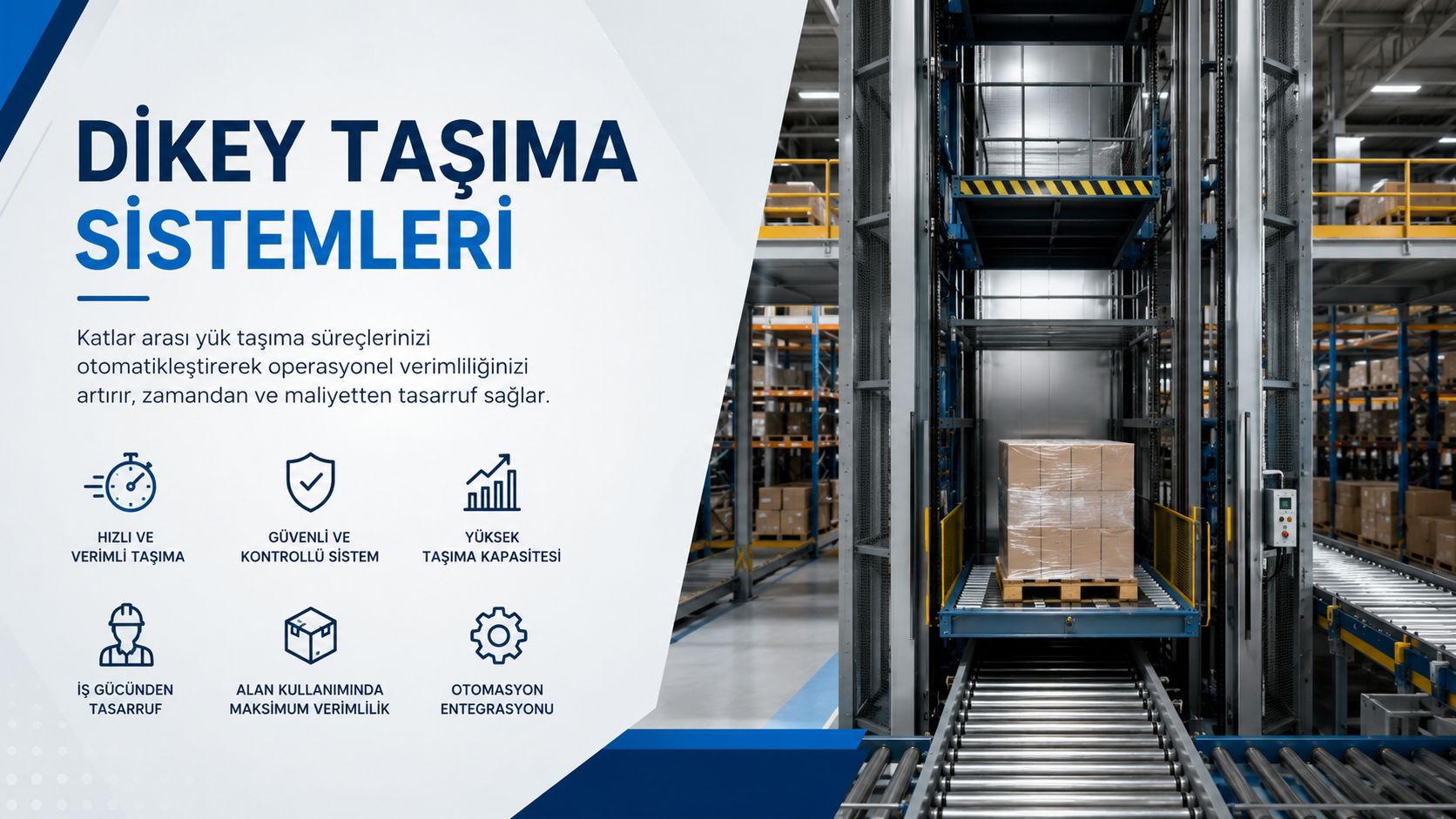
The Role of Case Pallet Elevators
One of the most important solutions used in warehouse automation is Case Pallet Elevators systems. These systems:
- Speeds up palletized product transfers
- Optimizes product movement between floors
- Increases job security
- Reduces operational bottlenecks
- Minimizes forklift usage
It offers significant efficiency advantages, especially in facilities with intense product movement.
Full Integration with Conveyor Systems
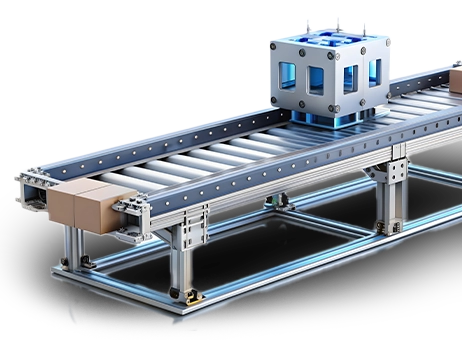
Vertical transport systems provide maximum performance when working with horizontal transport infrastructures. That's why many businesses:
It uses systems such as integrated with automation infrastructures. In this way, products move uninterruptedly within the warehouse, increasing operational efficiency.
How to Achieve Space Efficiency?
In warehouse investments, not only operation speed but also space utilization is of great importance. Especially due to high rental and investment costs, the available space must be used in the most efficient way. Thanks to vertical transport systems, warehouses can expand upwards and products can be stored safely at different levels. This approach can increase warehouse capacity while reducing the need for new space investment.
Smart Storage with AS-RS Systems
In modern warehouses, these technologies are often used together with automated storage solutions. AS-RS Mini Load Systems make it possible to store products automatically and provide quick access when necessary. Thanks to this integration:
- Storage capacity increases
- Product access times are reduced
- Operational speed increases
- The rate of human error decreases
- Inventory management becomes more efficient
Advantages Provided in High Volume Operations
Order volumes are constantly increasing in the e-commerce and logistics sector. Therefore, it is of great importance that product transfer processes proceed quickly and uninterruptedly. Thanks to these systems:
- Faster order preparation
- Shorter transfer times
- Higher operational capacity
- Lower wait times
- More efficient workforce use
- Higher customer satisfaction
can be obtained.
New Generation Transfer Technologies in Warehouse Automation
Digital transformation in the logistics industry continues unabated. Warehouse operations are becoming more efficient thanks to artificial intelligence-supported software, smart sensors and automation technologies. Vertical transportation systems, one of the important parts of this transformation, play a critical role in terms of speed and efficiency, especially in growing warehouse operations. It is expected that more businesses will turn to these systems within the scope of automation investments in the future.
Frequently Asked Questions
What do vertical transport systems do?
It increases operational efficiency by ensuring fast and safe transportation of products between different floors.
In which sectors are these systems preferred?
It is widely used in logistics centers, e-commerce warehouses, production facilities and distribution centers.
How can warehouse space be used more efficiently?
Thanks to vertical storage and automation solutions, existing space can be used more effectively.
What is the relationship between case pallet elevators and vertical transport systems?
Case pallet elevators are one of the important vertical transportation solutions that automate product transfers between floors.
Do automation systems increase workforce efficiency?
Yes. It reduces the need for manual handling, allowing employees to work in more productive areas.
You can contact us to get detailed information about vertical transportation systems and warehouse automation solutions: Contact Via WhatsApp
Related guides: What is a conveyor? Types and selection guide · How is the conveyor system cost determined? · KOAL conveyor systems

Since 2010 we have designed, built, installed and serviced sorter and conveyor systems in Gebze. These articles draw on our field experience.