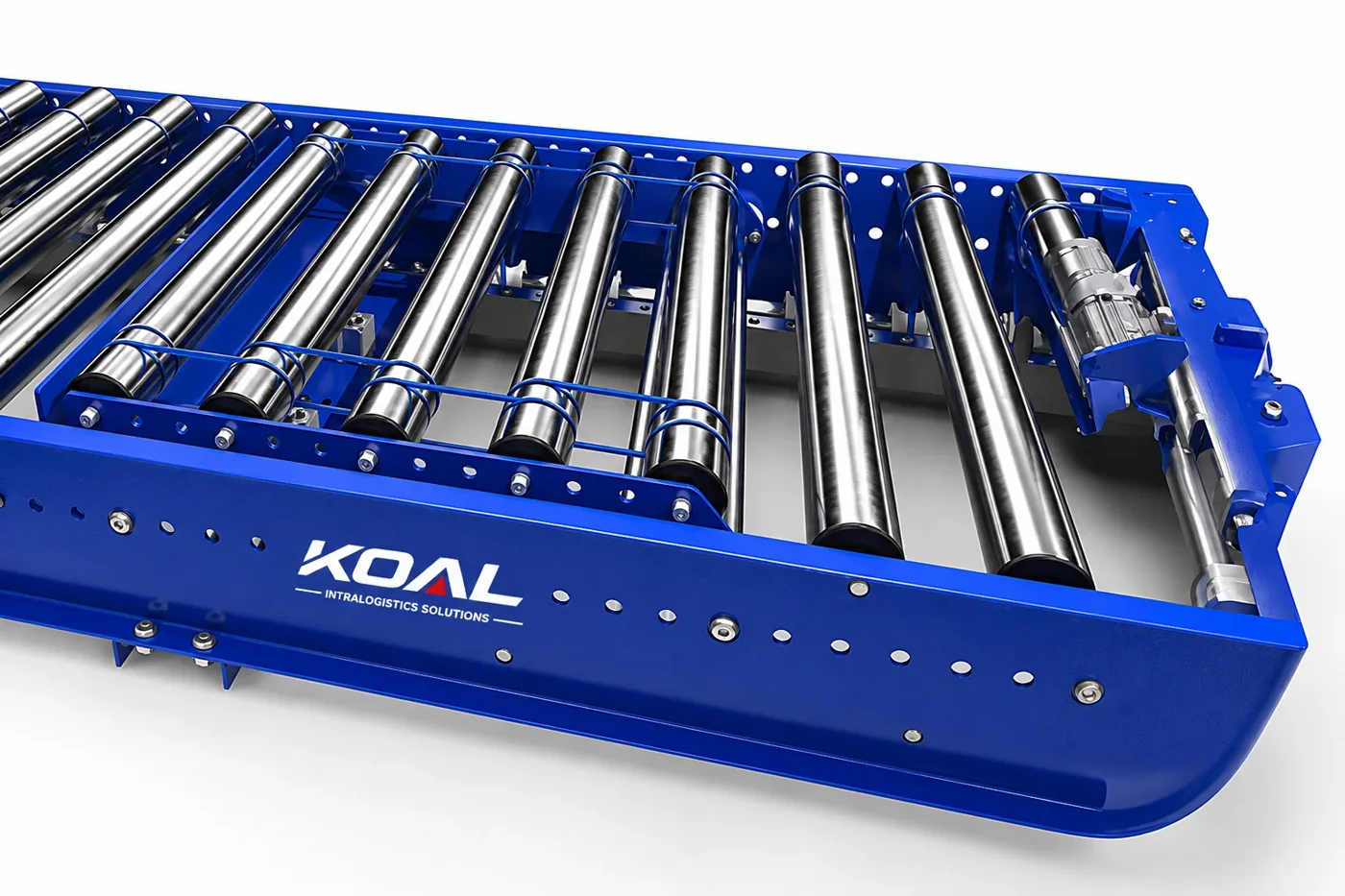

Fast Loading and Unloading Solutions with Telescopic Conveyors
Telescopic conveyors are advanced transportation systems used to accelerate loading and unloading processes in warehouses, logistics, e-commerce and production facilities. Thanks to its extendable and collapsible structure, it provides access to the inside of vehicles such as trucks, trailers and containers.
These systems; It helps to transport different products such as parcels, cardboards, packages, boxes and sacks more regularly, quickly and safely. By reducing the need for manual handling, employee productivity increases and operation time is shortened.
It is of great importance to use the correct loading equipment, especially for businesses with intensive shipments. At this point, tape systems with a telescopic structure make the product flow within the warehouse more controlled.
What is Telescopic Conveyor?
Telescopic conveyor is a belt conveyor system whose length can be adjusted and facilitates the transportation of products into or out of the vehicle. Unlike standard conveyor lines, it can move forward and backward. In this way, it can be positioned according to the loading area.
The system works with a motorized belt structure and extendable boom mechanism. The operator can move the equipment forward or backward with the help of the remote control. Thus, the products can be carried directly into the vehicle.
This structure provides serious time advantages, especially in truck loading, truck unloading and container operations.
How Does the System Work?
After the products are placed on the conveyor belt, they are transferred to the desired direction with the belt movement. Thanks to its bi-directional working feature, it can be used in both loading and unloading operations.
The extend and retract function allows the operator to access the vehicle more easily. The system can stand at any length and can be adjusted according to the need for operation. In this way, there is no need to manually transport the products over long distances in the vehicle.
The smart design structure creates a more controlled workflow with fewer workers and operators. This advantage is directly reflected in costs, especially in facilities with intensive product entry and exit.
For Which Products Is It Used?
This transport solution is suitable for businesses with a wide variety of products. System design can be made according to different weights and packaging types.
The main portable products are:
- cardboard boxes
- parcels
- Packaged products
- sacks
- cargo shipments
- E-commerce orders
- Light and medium weight packaged products
Ensuring regular flow in these product groups increases shipping speed and reduces the risk of product damage.
Areas of Use
Telescopic Conveyors can be used in many sectors with high product transport intensity. Thanks to its flexible structure, it adapts to different working environments.
Main areas of use:
- E-commerce warehouses
- Cargo and distribution centers
- logistics facilities
- Post-production shipping areas
- Retail warehouse operations
- Container loading areas
- Truck and trailer loading ramps
The biggest contribution of the system in these areas is that it makes the loading and unloading process faster, safer and more planned.
Advantages Provided
These systems provide businesses with not only speed; It also provides security, order and cost advantages.
Flexible Use
The structure, which can be extended or shortened, easily adapts to different vehicle types. The system can be advanced to the point needed and withdrawn when the operation is completed. This feature is an important advantage, especially for businesses with multiple loading areas.
High Efficiency
Thanks to its easy use and automatic operation feature, more products can be transported with fewer personnel. In cases where the maximum conveyor speed can reach 30 m/min, a carrying capacity of up to 2250 products per hour can be achieved.
This performance helps prepare orders faster during busy shipping processes.
Safe Operation
Reducing the need for manual handling reduces the physical burden of employees. Moving products more regularly also reduces the risk of falls and damage.
Thanks to its solid construction, quality spare parts and reliable engine structure, the system can be used safely for a long time.
Lower Cost
It requires less labor than traditional loading methods. This helps businesses reduce their operational costs. Labor savings become more evident, especially in companies that make high-volume shipments.
Technical Information
| Feature | Value |
|---|---|
| Maximum Load Capacity | 100 Kg/m |
| Conveyor Speed | 27-30 m/min |
| Working Direction | two-way |
| Opening Speed | 5-10 m/min |
| Bandwidth | 600 / 650 / 700 / 800 / 900mm |
| Optional Bandwidth | 1000/1200mm |
| Total Length | 9000 / 12000 / 15000mm |
| Height | 750 / 950 / 1000mm |
| Hydraulic Tilting System | 0-4º |
| Ambient Temperature | 0 to +50 °C |
Driver Features
| Feature | Value |
|---|---|
| Supply Voltage | 380V / 50Hz / 3 Phase |
| Electric Power | Max. 4 kW |
| Engine Type | gearmotor |
Material Properties
| Feature | Value |
|---|---|
| Conveyor Belt | PVC coated two-layer polyester fabric, matte top, black 3 mm |
| Under Belt Sheet | galvanized steel |
| Drive Drum Material | Steel |
What to Consider When Choosing a System?
To choose the right system, not only length or bandwidth, but also the general operating structure of the business should be evaluated.
Product Type
The size, weight and packaging structure of the products to be transported are decisive in the system design. Appropriate bandwidth should be selected for different product groups such as parcels, packages or sacks.
Vehicle Structure
Truck, trailer, or container dimensions must be taken into account. System length and working height should be planned in accordance with the type of vehicle used.
Daily Transaction Volume
In businesses with intensive shipments, higher capacity solutions should be preferred. The daily number of products, working time and loading frequency must be calculated accurately.
Workspace
The ground, electrical infrastructure and operator movement area of the installation area must be suitable. For safe use, sufficient working space must be left around the system.
You can contact us via our contact page to get information about the specific solution for your project.
What Does It Bring to Businesses?
These systems provide businesses with many operational advantages during loading and unloading processes.
Major achievements:
- Reduces loading time
- Speeds up unloading processes
- Reduces labor requirement
- Makes the product handling process safer
- Regulates in-warehouse flow
- Reduces operational costs
- Makes access inside the vehicle easier
- Reduces risk of product damage
Thanks to these advantages, businesses can create a more planned, faster and more efficient shipping process.
Maintenance and Long-Term Use
Regular maintenance is required for the system to operate for a long time. Belt, motor, drum, bearing and electrical connections should be checked at regular intervals.
Thanks to regular maintenance, unexpected downtimes are prevented and operational continuity is maintained. Creating a maintenance plan is important to maintain system performance, especially in busy facilities.
Things to consider during the maintenance process:
- Tape surface should be checked
- Moving parts must be kept clean
- Motor and reducer should be inspected regularly
- Drum and bearing checks should be done
- Electrical connections should be checked
- Operators should be trained in correct use