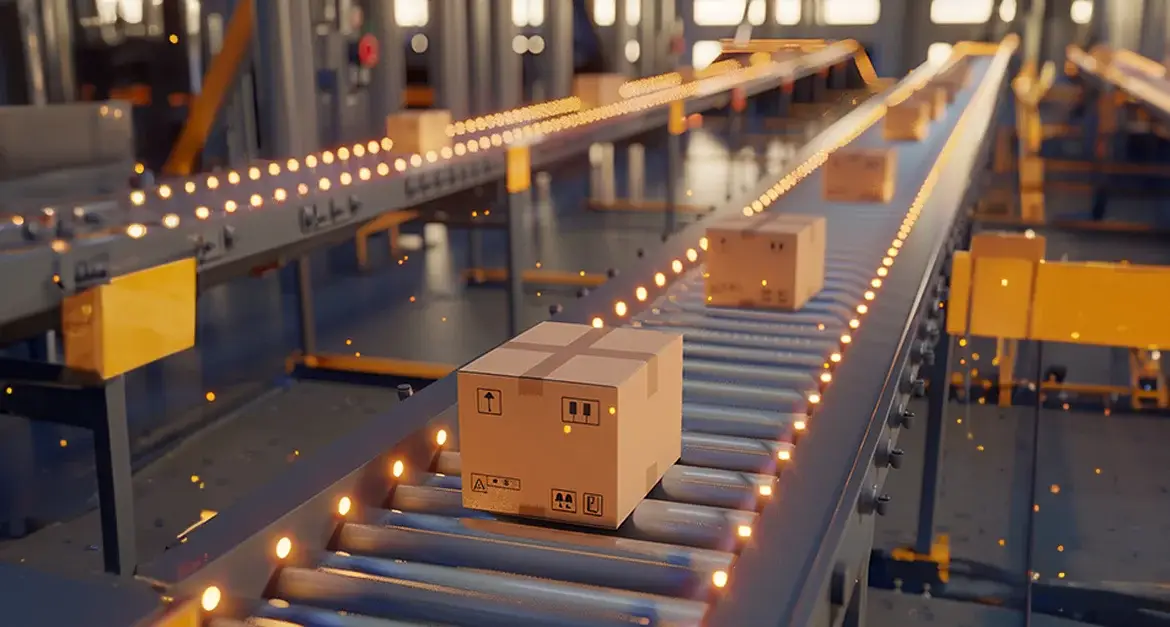
What is a conveyor? Conveyor is a mechanical transport system that continuously moves products and materials from one point to another on a belt, roller, chain or modular belt. It reduces manual handling in warehouses, production lines, cargo and distribution centers, and accelerates and streamlines product flow.
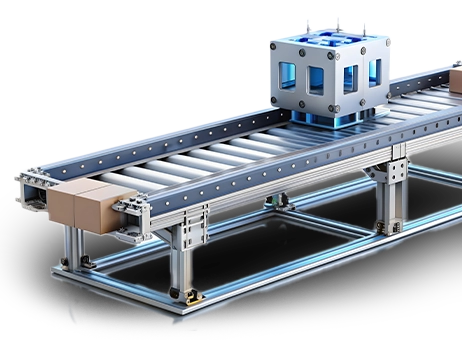
The word conveyor comes from the English word conveyor; The short answer to the question "What does conveyor mean?" is "conveyor belt system". A conveyor line generally consists of a carrying surface (belt, roller or chain), drive unit (motor and reducer or drum motor), chassis and control system.
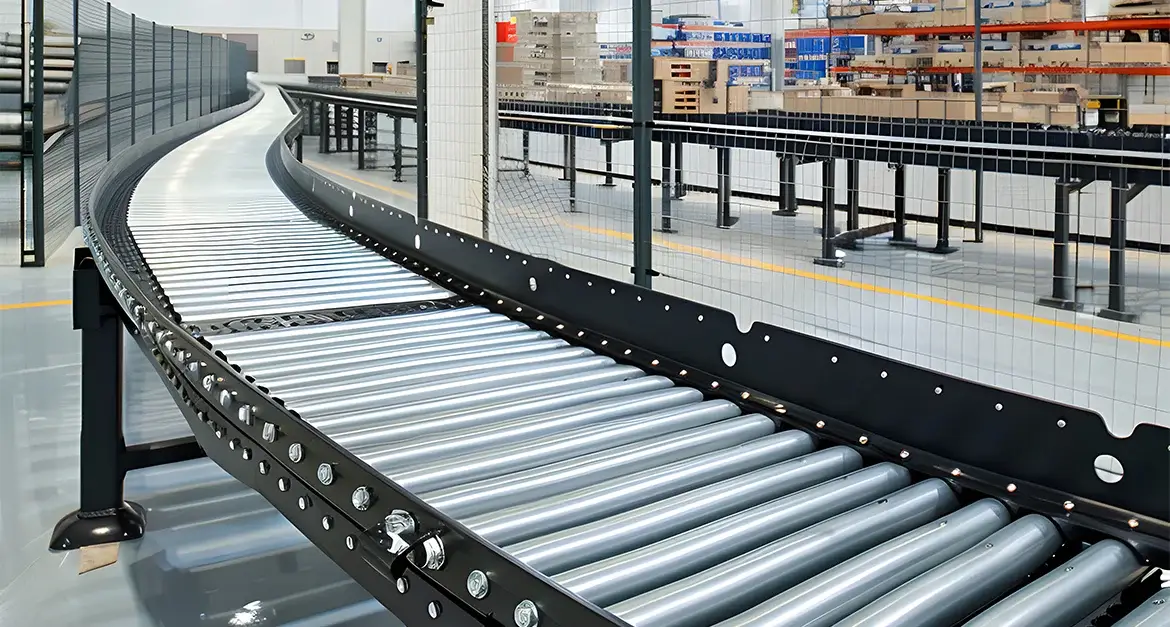
How does the conveyor work?
- The motor rotates the drive drum or motorized rollers.
- With this movement, the tape, roller or chain carries the product along the line.
- Sensors detect the position of the product; The control system stops the line, accelerates it or directs the product to another line.
- At the end of the line, the product is transferred to packaging, shipping, storage or a sorter system.
What are the types of conveyors?
Correct conveyor type; It is selected according to the weight of the product, base structure, line length and working environment. Main types produced by KOAL Makine and their typical values:
| Conveyor type | What is it suitable for? | Max. load | Length |
|---|---|---|---|
| belt conveyor | Boxes, packages, products with irregular bases; food and pharmaceutical (FDA/GMP compliant tape option) | 50kg/m | 1.5–12.5m |
| Roller (motorized roller) conveyor | Flat bottom boxes and cases; regional, quiet operation | 60kg/m | 1.5–12.5m |
| chain conveyor | Pallet, heavy, wide and long materials | 100kg/m | 0.8–6m |
| Modular belt conveyor | Washable lines, return and L/Z type lines | 35kg/m | 1.5–6m |
| return conveyor | 30°–180° direction change | 35–50 kg/m | Inner radius 450–1200 mm |
| merge conveyor | Joining side lines to the main line at a 30°/45° angle | 50kg/m | 1.5–2m |
| telescopic conveyor | Truck, trailer and container loading-unloading | 100kg/m | 9–15m |
| Accordion conveyor ( KOALFLEX ) | Portable temporary lines that extend and shorten | 60kg/m | 3.6m indoor / 9.8m outdoor |
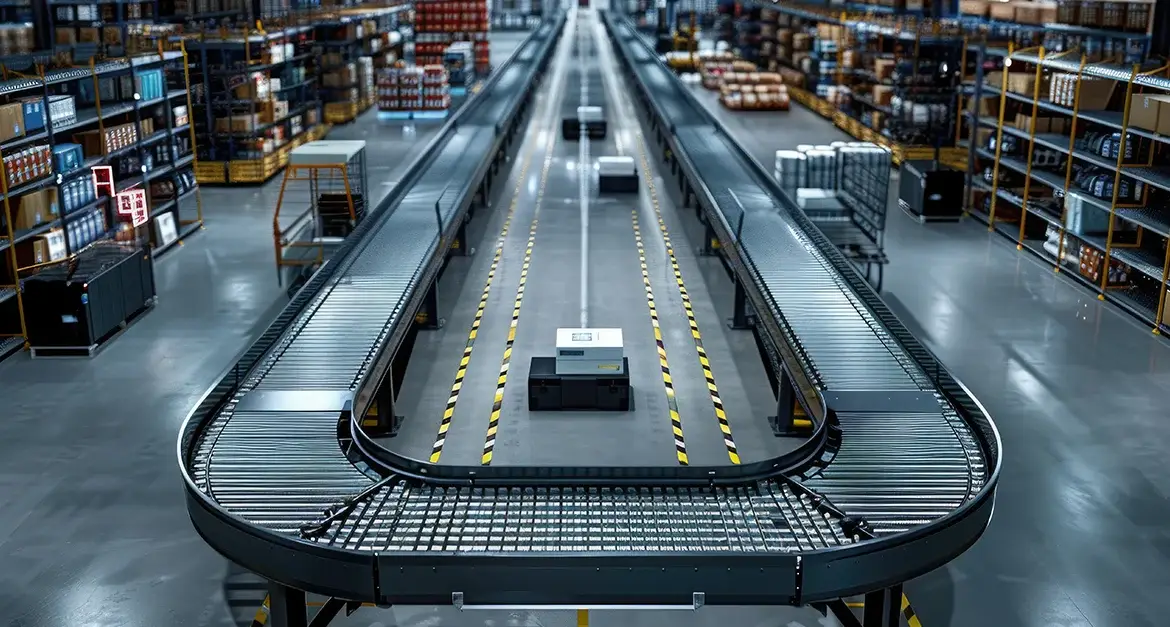
Where is the conveyor used?
- E-commerce and fulfillment warehouses
- Cargo and distribution centers
- Production and assembly lines
- Food, pharmaceutical and cosmetic packaging lines
- Automotive supplier industry
- Airport baggage and cargo areas
What to look for when choosing a conveyor?
- Product: smallest and largest size, weight, base structure (box, case, pallet, bag).
- Capacity: number of products per hour and peak peak value.
- Layout: line length, turns, floor difference, tight spaces.
- Environment: temperature, humidity, hygiene and washing needs.
- Integration: barcode reader, WMS /ERP and sorter connection.
- Service: spare parts and technical service support.
You can contact KOAL Makine engineering team or examine our conveyor systems to determine the appropriate conveyor type and capacity for your project.
Frequently asked questions
What does conveyor mean?
Conveyor comes from the English word “conveyor” and means “carrier”. It is the general name of mechanical systems that continuously transport products on tape, roll or chain.
What is the most used conveyor type?
The most common types in warehouse and logistics operations are belt and roller conveyors. Belt conveyor is preferred for products with irregular bottoms, while roller conveyor is preferred for flat-bottomed boxes and cases.
What is the difference between conveyor and sorter?
The conveyor moves the product from one point to another. Sorter, on the other hand, recognizes the product by barcode or sensor and sorts it into the correct output. Sorter systems often work in conjunction with conveyor lines.
How much load does the conveyor line carry?
Varies by type. The carrying capacity per meter in KOAL Makine conveyors is 35 kg/m for modular belt, 50 kg/m for band, 60 kg/m for roller and accordion, and 100 kg/m for chain and telescopic.
Can the conveyor line be added to the existing system?
Yes. New lines can be integrated into existing conveyor and sorter systems with connection modules such as merge and return conveyors.

Since 2010 we have designed, built, installed and serviced sorter and conveyor systems in Gebze. These articles draw on our field experience.